
Cedar VS Pressure Treated Fence: Which is Better for Missouri Homeowners
Cedar VS Pressure Treated Fence: Which is Better for Missouri Homeowners?
Cedar and pressure-treated pine are two of the most commonly used wood fencing materials in Missouri, but each offers different advantages depending on your budget, appearance preferences, and long-term maintenance goals. Pressure-treated lumber is a more economical and budget-friendly option while still providing strong structural performance. Cedar, on the other hand, offers a premium natural appearance along with natural resistance to insects, rot, and decay.
For Missouri homeowners dealing with humid summers, freezing winters, and fluctuating moisture levels, choosing the right fence material can make a major difference in longevity and maintenance costs over time.
What is Cedar Fencing?
Make it stand out
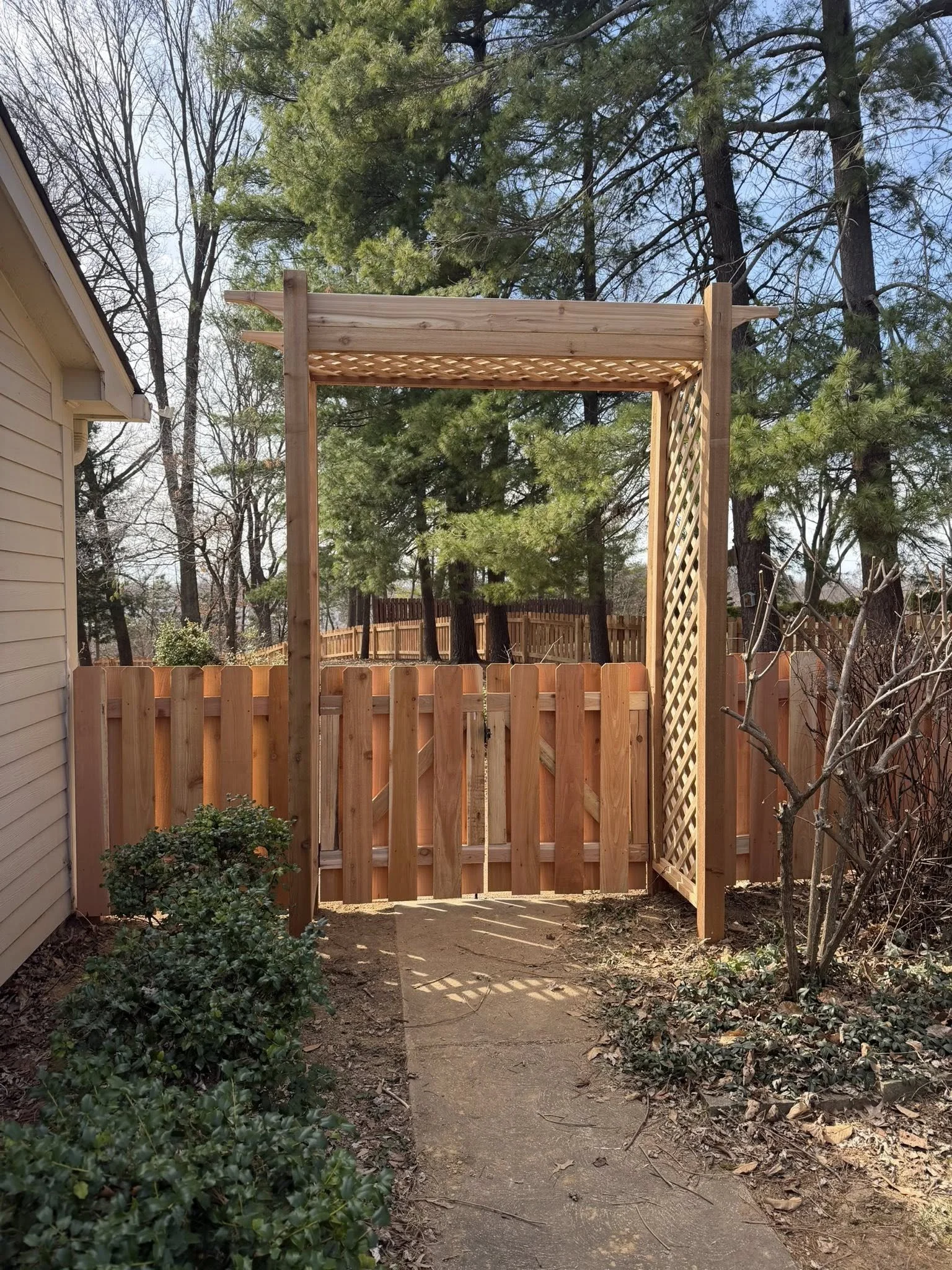
A four-foot cedar shadowboxed fence with an inline custom cedar arbor, containing decorative top boards and cedar latticework.
The primary type of cedar used for fencing in the Midwest is Western Red Cedar. This wood grows naturally along the Pacific Coast of North America and is highly valued for both its appearance and durability. With its rich reddish tones and distinctive grain patterns, cedar is often chosen by homeowners looking for a more upscale, natural-looking fence.
Cedar also contains natural oils that help resist insects, rot, and decay without requiring chemical treatment. This makes it especially well-suited for Missouri’s humid summers and changing seasonal weather conditions.
Another major advantage of cedar is its dimensional stability. Cedar boards tend to shrink, twist, and warp less than many pressure-treated products, helping the fence maintain a straighter and cleaner appearance over time.
What Is Pressure-Treated Fencing?
Pressure-treated fencing is typically made from pine lumber that has been chemically treated to resist moisture, fungal decay, and insect damage. During the treatment process, preservatives are forced deep into the wood fibers under pressure, helping extend the life of the material in outdoor environments.
Pressure-treated pine is one of the most affordable fencing materials available, making it a popular choice for homeowners focused on durability and cost-effectiveness. It is commonly used for fence posts, rails, and even pickets throughout Missouri.
While pressure-treated lumber is highly durable structurally, it usually has a greener or lighter appearance when first installed and may be more prone to warping or twisting as it dries over time. Proper installation and sealing can help minimize these issues.
Appearance Differences
For many homeowners, appearance is one of the biggest deciding factors between cedar and pressure-treated fencing.
Cedar is generally considered the more visually appealing option because of its warm color tones, natural grain patterns, and premium look. It can be left untreated to weather naturally into a silver-gray patina or stained to preserve its original color.
Pressure-treated fencing tends to have a more uniform and utilitarian appearance. Although it can also be stained or painted, it usually lacks the rich character and texture that cedar naturally provides.
If curb appeal and natural aesthetics are priorities, cedar is often the preferred choice.
Durability and Lifespan in Missouri Weather
Missouri weather can be hard on wood fences. Between humidity, heavy rainfall, freeze-thaw cycles, and intense summer heat, durability matters.
Cedar naturally resists moisture and insects, which helps it perform well over time with proper maintenance. Many cedar fences can last 20 years or longer when sealed and maintained regularly.
Pressure-treated fencing is engineered specifically for outdoor durability and ground contact applications. When properly maintained, pressure-treated fences can also last 15–20 years or more.
The quality of installation often matters just as much as the material itself. Proper post depth, drainage, and sealing all contribute significantly to fence longevity in Missouri.
Maintenance Requirements
Both cedar and pressure-treated fences benefit from routine maintenance, though the type of maintenance differs slightly.
Cedar Maintenance
Staining or sealing every 2–4 years
Occasional cleaning to remove mildew or algae
Monitoring for surface weathering
Pressure-Treated Maintenance
Allowing wood to fully dry before staining after installation
Sealing or staining every 2–3 years
Monitoring for twisting, cracking, or warping
Neither option is completely maintenance-free, but regular upkeep can dramatically extend the life and appearance of either fence.
Cost Comparison
Pressure-treated fencing is usually the more affordable option upfront. For homeowners with larger properties or tighter budgets, this can make a significant difference in total project cost.
Cedar fencing generally costs more because of the material quality and premium appearance. However, many homeowners feel the added curb appeal and lower warping potential justify the higher investment.
Long-term value depends on your priorities:
Choose pressure-treated if budget and structural durability are top priorities.
Choose cedar if appearance and premium aesthetics are more important.
Which Fence Material Is Better?
There is no one-size-fits-all answer. The best fencing material depends on your goals, budget, and how important appearance is to your property.
Cedar May Be Best If You:
Want a premium natural wood appearance
Prefer less warping and twisting
Value natural insect and rot resistance
Plan to stain and maintain the fence long-term
Pressure-Treated May Be Best If You:
Want a lower upfront cost
Need strong structural durability
Are fencing a large property economically
Plan to paint or stain the fence later
Many Missouri homeowners also choose a combination approach using pressure-treated posts with cedar pickets to balance cost and appearance.
Final Thoughts
Both cedar and pressure-treated fencing can perform very well in Missouri when installed correctly and maintained properly. Cedar offers superior natural beauty and stability, while pressure-treated fencing delivers dependable durability at a lower price point.
If you are deciding between the two, working with an experienced local fence contractor can help you choose the best material for your property, budget, and long-term goals.
Need Help Choosing the Right Fence?
At Midwest Fence, we help Missouri homeowners select and install fences built to withstand Midwest weather conditions while matching the style of their property. Whether you are considering cedar, pressure-treated, vinyl, or ornamental fencing, our team can help you compare options and find the right fit for your home.